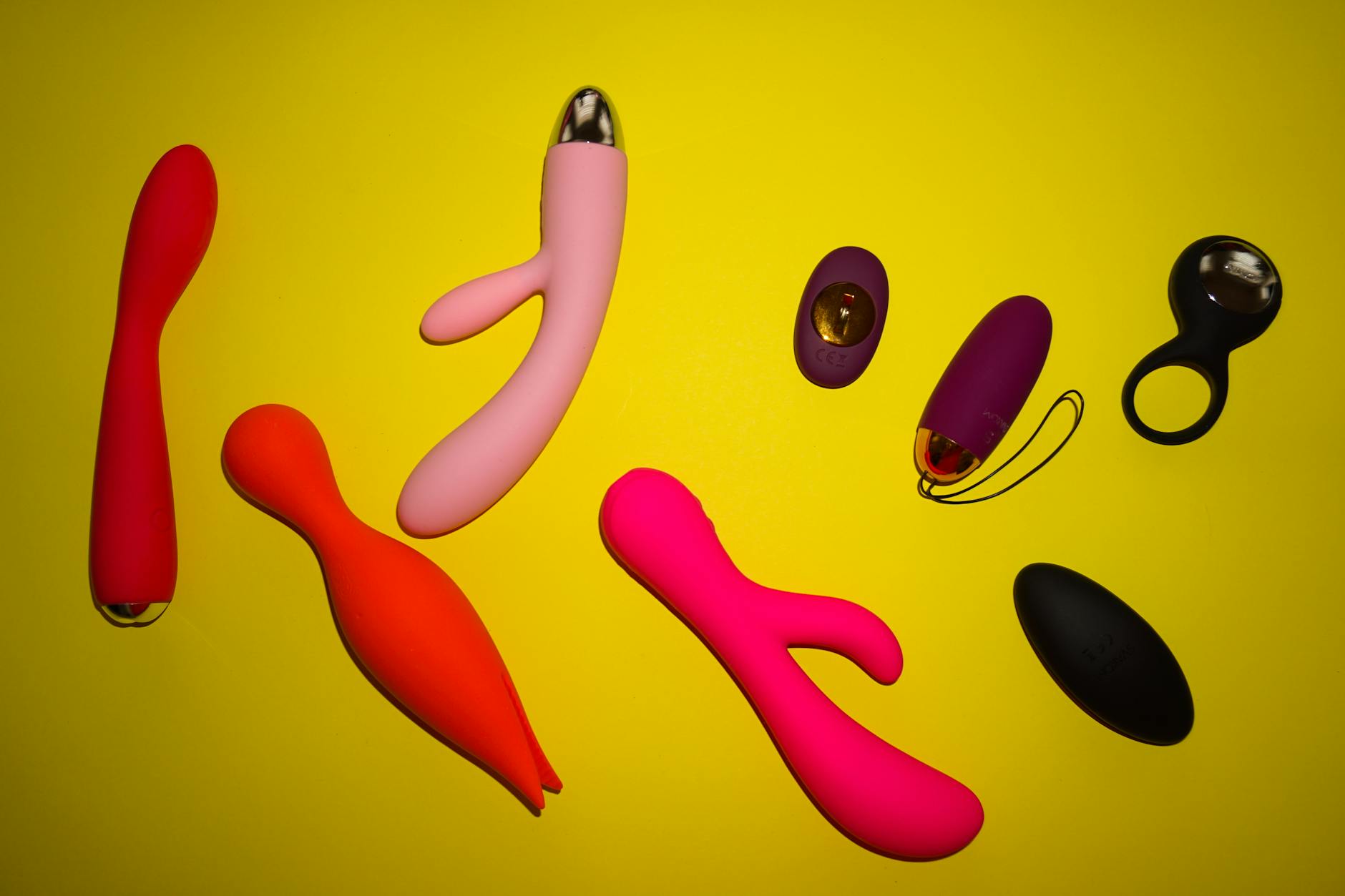
Here's the thing about vibration
Vibration sells. It's the default. Nearly every sex toy marketed comes with the assumption that faster equals better, that buzzing is the goal. But your clitoris doesn't care about defaults. Some bodies respond infinitely better to sustained pressure, gentle suction, and the kind of steady contact that lets sensation build slowly and deeply.
If vibration has always felt too intense, too scattered, or just plain wrong, you're not broken. You might just be a pressure person, not a vibration person. That's a meaningful distinction, and it changes everything about how you use lemon vibrators.
Why some clits prefer pressure over vibration
Vibration is a small, fast movement. Pressure is steady contact that stimulates nerves in a sustained way. Your clitoris has about 8,000 nerve endings concentrated in a small area. Vibration distributes that stimulation rapidly across all of them at once. Pressure lets you feel distinct sensations building in sequence.
Think of it like the difference between tapping your finger repeatedly on someone's arm versus holding steady contact while they press back. Both create sensation, but they feel completely different.
Several physiological reasons explain pressure preference:
Nerve density and accommodation. If your clitoris is particularly sensitive, rapid vibration can feel overwhelming or numbing because your nerves adapt to constant input. Steady pressure lets you maintain awareness of each subtle sensation without that adaptation effect kicking in.
Arousal phase. During early arousal, many bodies need time to build. Vibration jumps straight to high intensity. Pressure allows gradual escalation that feels more natural to how you warm up.
Pelvic floor engagement. The pelvic floor muscles contract during arousal. Vibration can sometimes trigger tension. Steady pressure often allows the pelvic floor to relax more fully, which deepens the entire experience.
If you've noticed orgasms feel more intense when you apply manual pressure without any toy, or when you use something that suctions rather than vibrates, you're experiencing this firsthand.
How lemon vibrators work for pressure-based play
Lemon clitoral vibrators, like other air-suction devices, create a seal around the clitoris and use gentle suction to stimulate. That's fundamentally different from a traditional vibrator's mechanism.
Here's what matters for pressure play:
The suction itself is the primary sensation. You're not relying on vibration to create pleasure. The device creates a sensation of gentle pulling and pressure against the clitoral tissue. That seal, that sustained contact, is where the magic lives.
You can absolutely use a lemon vibrator at its lowest intensity setting, or even turn off vibration entirely on models that allow it, and still experience deep, consistent stimulation. The suction does the work. The vibration is optional.
The setup for pressure-focused stimulation
Three things change when you're optimizing for pressure instead of vibration.
First, lubrication matters more. Without vibration as a backup sensation, the seal needs to feel perfect. A small amount of water-based lubricant around the opening where the toy contacts your skin helps create that tight seal without friction. You're not using lube to make it wet. You're using it to make the contact seamless.
Second, positioning is everything. You want the toy held completely still against your clitoris, not moving around. If you're using a hand-held lemon vibrator like a traditional option, rest your hand firmly against your body so the device stays in one place. The pressure itself is doing all the work. Any movement disrupts the sensation.
Third, start at the absolute lowest setting if vibration is on at all. Many people expect to gradually increase intensity. With pressure-based stimulation, you often don't need to. A setting of 1 or 2 can deliver more than enough sensation because the suction is already providing constant, deep stimulation. Bumping it up usually feels too much, not better.
Building arousal with steady pressure
Pressure-based play often works best with patience.
Unlike vibration, which creates immediate sensation, steady pressure requires your nervous system to engage more actively. You're learning to feel subtle changes in pressure and suction rather than tracking intensity. That's a different skill, and it usually takes longer to build to orgasm. That's not a drawback. That's exactly the point.
Spend 10-15 minutes with the device held in one spot, at a low setting, before you expect strong sensation. Let arousal build. You'll notice sensation deepening gradually, often without you changing anything.
Many people find that when they stop chasing intensity and just stay with the steady pressure, orgasms feel different. Less like a spike, more like an arc that builds and crests. Some describe it as more full-body, less localized.
Combining pressure with partner play
If you're using a lemon vibrator with a partner, pressure preference changes the conversation.
Tell them you're not looking for the fastest route to orgasm. You want sustained contact. They can hold the device steady while you guide the angle. They can watch your response instead of watching the toy, and adjust based on what they see rather than assuming faster equals better.
Many couples find that pressure-based play creates more intimacy because it demands attention and presence. There's no autopilot of "turn it on and wait." There's active engagement, feedback, and adjustment.
When vibration actually helps pressure preference
Here's the counterintuitive part. Some people with pressure preference still benefit from very low vibration.
Vibration at setting 1 or 2, barely perceptible, can help with initial contact and arousal without feeling overwhelming. It's like adding a gentle pulse underneath the pressure. It's not the main event. It's a supporting note.
Experiment with this. Start at zero vibration, build some arousal, then add vibration at the lowest setting. Does it enhance the pressure sensation or compete with it. That answer is personal and often changes based on where you are in your cycle or your stress level.
Desensitization and pressure play
If your clitoris tends to feel numb or desensitized with vibration, pressure often works better for rebuilding sensation.
Vibration can sometimes numb nerves temporarily because of that adaptation effect I mentioned earlier. Steady pressure, because it doesn't trigger constant stimulation of all the same nerves at once, often allows sensation to stay acute longer. You notice more, feel more, and don't hit that numb wall.
If you're coming back to pleasure after a period of reduced sensation, pressure-based stimulation with a lemon vibrator, kept at low intensity, is often the most effective path to recalibration.
Common questions about pressure versus vibration
Does using pressure mean I can't have intense orgasms?
No. Intensity and vibration aren't the same thing. People with strong pressure-based orgasms often describe them as more intense than vibration-based ones, just different. They tend to feel more localized in the clitoris, with deeper muscular involvement. Give it at least five sessions before comparing.
Can I switch between pressure and vibration depending on my mood?
Absolutely. Your preference might be 80 percent pressure, 20 percent vibration. Or it might change weekly. Pay attention to what your body wants each time rather than deciding you're "a pressure person" permanently. Flexibility is normal and healthy.
Is there a toy designed purely for pressure with no vibration option?
Most air-suction devices, including lemon clitoral vibrators, create their primary sensation through suction and pressure. You can use them without activating vibration. Some allow you to turn vibration off entirely. Check product details, but most clitoral vibrators support both approaches.
What if pressure feels boring after vibration?
That's often a sign you haven't given it enough time. Your brain has been trained to expect and crave vibration. Pressure feels "wrong" at first because it's different. Try 10 sessions of pressure-only play before deciding. Most people find the opposite by session 5: vibration now feels too scattered.
Can I use pressure-based stimulation alone without any toy?
Yes. Manual pressure, using fingers to apply sustained contact and gentle movement, works beautifully for people with this preference. A toy simply makes sustained pressure easier over longer periods and with more consistent intensity.
How do I know if pressure preference is real or just what I'm used to?
Experiment in blocks. Try two weeks of pressure-only play with a lemon vibrator on its lowest setting. Then try two weeks of vibration focus. Notice which creates stronger arousal, easier orgasms, and which makes you want to come back. Your body's response is the only answer that matters.
The deeper point
Your pleasure doesn't come from the toy. It comes from understanding how your nervous system actually works, then choosing the tool that matches. Lemon vibrators are flexible enough to support pressure-based play because the suction is the real mechanism. The vibration is there if you want it. But pressure? That's always available.
Start with the lowest setting, no vibration if possible. Hold it still. Wait. Notice. That kind of attention to your own response is where real pleasure lives.
If you're ready to explore how a lemon vibrator fits into your specific pleasure pattern, <a href="/contact">reach out and let's talk about what might work for your body</a>.
Sources and further reading
Neuroscience of genital touch: Komisaruk, B. R., Beyer-Flores, C., & Whipple, B. (2006). The science of orgasm. Johns Hopkins University Press.
Clitoral nerve anatomy: Puppo, V., & Puppo, G. (2020). Anatomy of sex: Revision of the new anatomical terms used for the clitoris and the female external genitalia. Clinical Anatomy, 33(7), 1045-1051.
Sensory adaptation in pleasure: Stanley, H. F., & Sensibar, M. R. (2011). Neurophysiology of sexual response in women with genital pain disorders. Clinical Obstetrics and Gynecology, 54(4), 680-687.
Pelvic floor and arousal: DeLancey, J. O. (2016). Female sexual anatomy. The Clinical Manual of Sexual Disorders, 45-60.